Pete Hegseth.
Of all the people in Donald Trump’s administration who might have expected to become the first sacrificial offering following Tuesday night’s electoral catastrophe, the Secretary of Defense has apparently drawn the short straw.
And there is a certain poetic justice to that.
According to Reuters, Hegseth’s future has become the subject of considerable speculation following the Republican Party’s stunning midterm defeat. The Wall Street Journal reports that Trump has been asking allies whether he should retain his Defense Secretary.
Naturally, Trump insists that Hegseth is doing a very good job. Which should provide Pete with approximately the same comfort as a handwritten letter of recommendation from the captain of the Titanic, dated April 14, 1912. Meanwhile, Republican Representative Thomas Massie has already introduced eight articles of impeachment against Hegseth, and Axios reports that the House could confront the matter as early as next week.
Eight articles.
From a Republican.
Well, it’s a start.
The War Nobody Wants to Own
The political predicament confronting Hegseth is fairly straightforward. The administration launched its military campaign against Iran in February. The war continued through the midterm elections, producing a growing collection of strategic questions, economic consequences, and public dissatisfaction.
Hegseth was among the administration’s most enthusiastic advocates of the operation. According to Axios’s reporting, he promoted optimistic expectations about the campaign’s duration and prospects before the operation began. Those expectations have not aged particularly well.
Now, following an election in which voters punished Republicans, some of the same political figures who supported the administration are reportedly considering whether Hegseth should bear responsibility for the consequences.
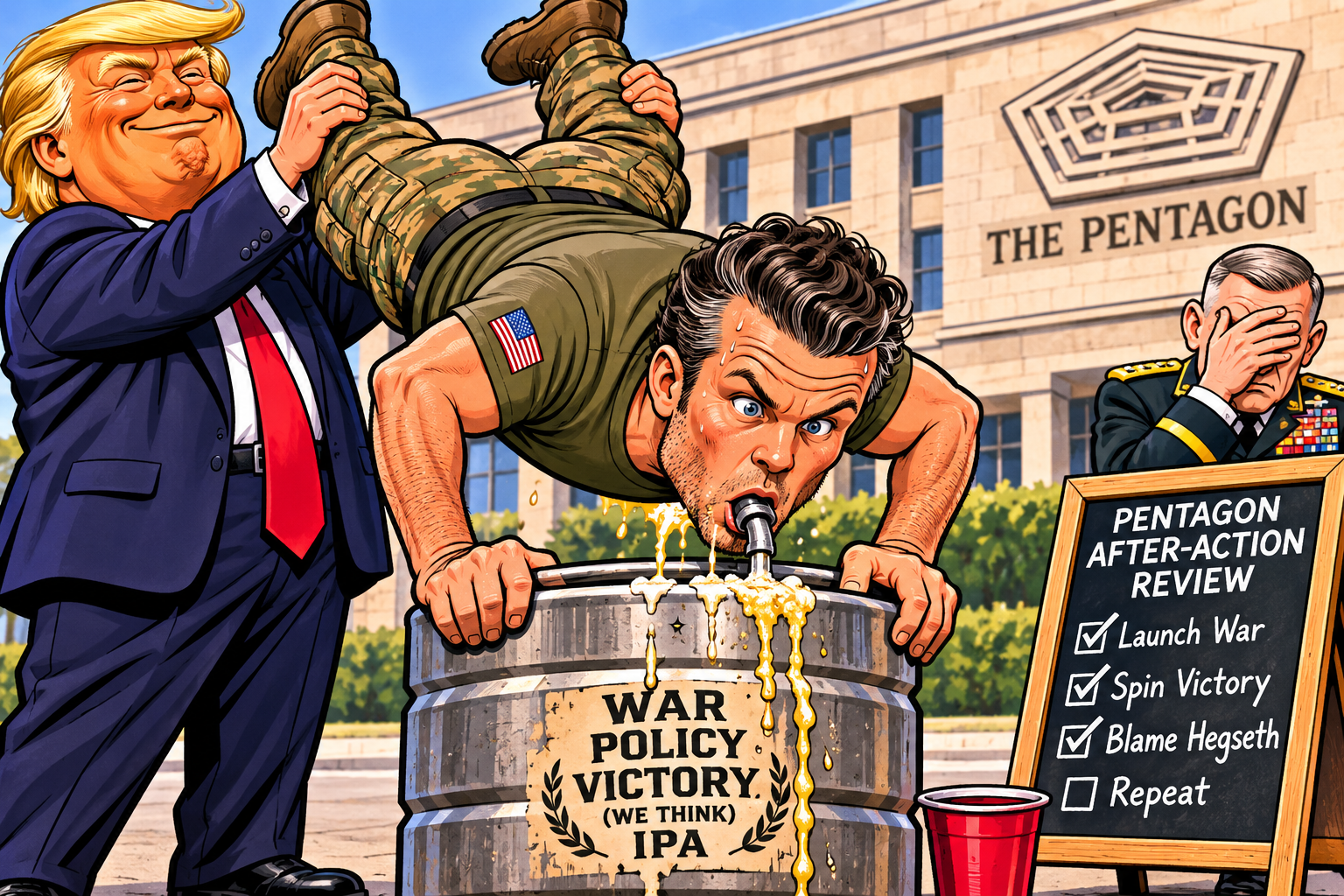
There is a certain convenience to this arrangement. The President orders a war. His Defense Secretary champions it. Congress allows the conflict to continue amid disputes over authorization. The voters eventually express their displeasure. And suddenly everyone wants to know who gave Pete Hegseth permission to make such a mess.
One can almost imagine the conversation.
“Mr. President, the voters are furious about the war.”
“Terrible. Who started it?”
“Well, sir…”
“Was it Biden?”
“No, sir.”
“Obama?”
“No.”
“Can we blame Hillary?”
“Sir, Pete is available.”
Problem solved.
Or at least, if past is prologue someone has to be to blame, and we know it’s never Trump’s fault.
Eight Articles, and a Constitution
The impeachment effort deserves considerably more attention than the political speculation surrounding Hegseth’s employment prospects.
On September 15, Republican Representative Thomas Massie announced eight articles of impeachment against the Defense Secretary.
The charges extend well beyond disagreement over the wisdom of the Iran war.
Massie’s resolution alleges violations of the War Powers Resolution, continuation of hostilities without congressional authorization, disregard of legal protections for civilians, unlawful lethal strikes against suspected drug traffickers, retaliation against Senator Mark Kelly for protected speech, and unlawful military operations involving Venezuela and Yemen.
These are serious allegations. They have not been established merely because a member of Congress included them in an impeachment resolution. Hegseth and the Pentagon deny wrongdoing. But the allegations identify conduct that Congress has both the authority and the responsibility to examine.
Consider the central dispute over Iran. The War Powers Resolution of 1973 establishes procedures and limitations governing the introduction of American armed forces into hostilities without congressional authorization. Among its provisions are reporting requirements and a general 60-day termination framework, subject to specified exceptions and an additional withdrawal period.
Massie contends that Hegseth violated those limitations by continuing military operations beyond the statutory period and disregarding congressional restrictions.
The administration’s legal position, including its characterization of the military operations and the scope of presidential authority, must be considered in evaluating those allegations.
There are substantial constitutional questions here. They deserve hearings, testimony, documents, and a serious examination of the legal justifications advanced by the administration.
Congress should be particularly interested in who made the decisions, what legal advice was provided, what objections were raised, and whether statutory restrictions were knowingly disregarded. That investigation should extend considerably further than Pete Hegseth’s office.
The Commander in Chief Seems to Have Escaped the Conversation
Here is where the developing political narrative becomes especially interesting. Donald Trump is the President of the United States.
Under Article II of the Constitution, he is Commander in Chief of the armed forces. Hegseth serves under his authority. The President has defended the war, defended Hegseth, and publicly defended the administration’s conduct. Yet, as Republicans search for an explanation for Tuesday’s losses, Hegseth has emerged as a particularly attractive candidate for political accountability. Isn’t that convenient?
If Congress concludes that the Iran campaign involved serious violations of constitutional or statutory limitations, the inquiry cannot reasonably end with the official responsible for executing presidential policy. It must examine the President’s role in authorizing, directing, and continuing the conduct. That conclusion follows from the basic structure of executive authority.
It also raises an obvious question for the politicians suddenly expressing concern about the war.
Where the hell were you when Congress was supposed to be exercising its authority over it?
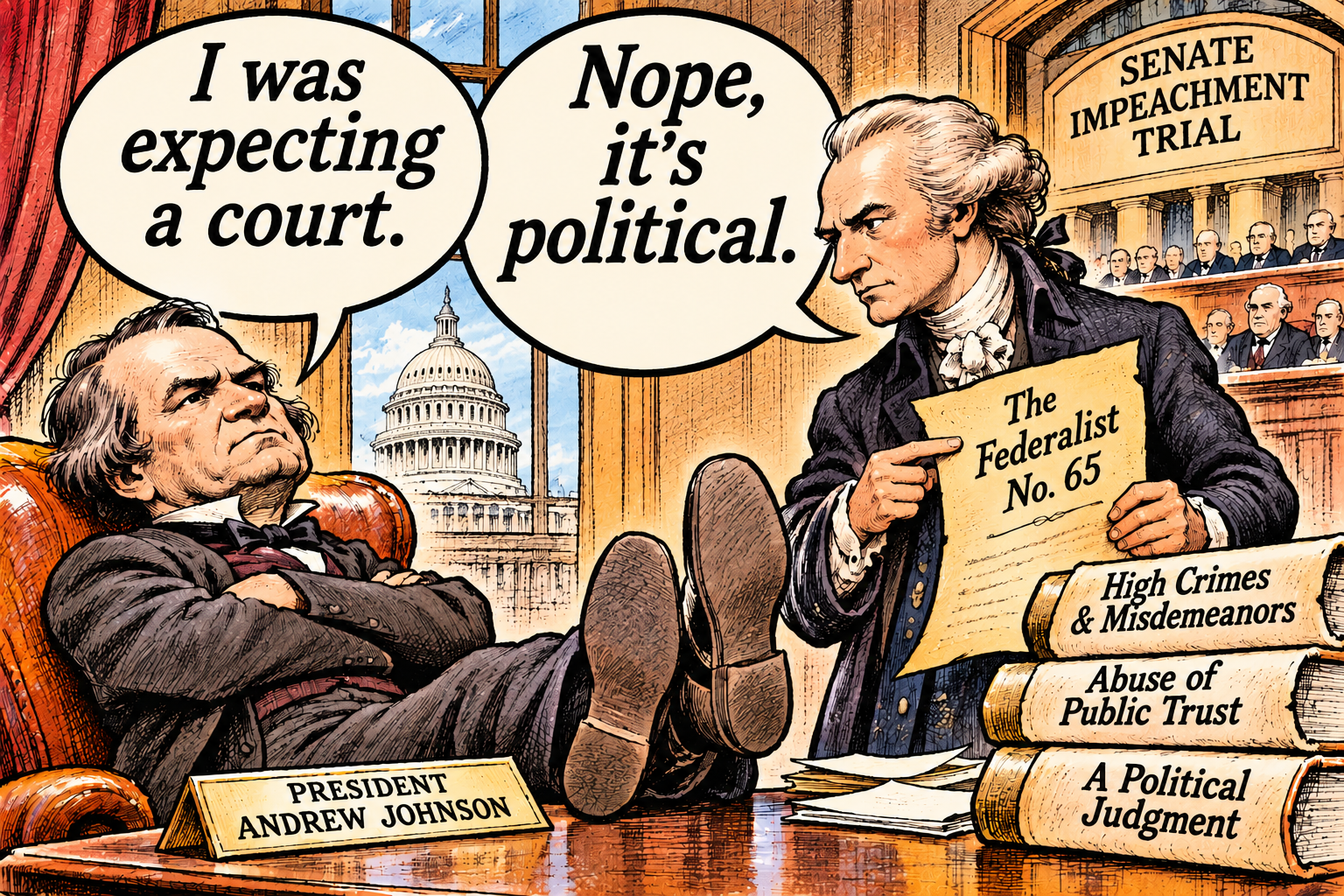
The Constitution has not undergone some mysterious transformation since Tuesday’s election. Congress possessed its legislative, oversight, appropriations, and impeachment powers before voters went to the polls. The Senate’s own explanation of its constitutional responsibilities identifies impeachment as a fundamental component of the system of checks and balances.
Those responsibilities do not depend upon favorable polling numbers. Nor should congressional concern about constitutional limits suddenly materialize when the political consequences become unpleasant.
A Republican Congressman Is Doing Something Remarkable
Thomas Massie deserves credit for introducing the articles. Readers of The Removal Advance should understand that this is not an endorsement of Massie’s broader political philosophy. We have no particular obligation to agree with him on taxes, spending, healthcare, or the approximately 9,000 other subjects upon which reasonable people might disagree.
But Massie has taken a position that many of his colleagues have avoided. He has identified conduct he believes constitutes impeachable misconduct, articulated specific allegations, and demanded that Congress exercise its constitutional authority. That is what the institution is supposed to do. And he did it before Tuesday’s election supplied an overwhelming political incentive to reconsider the administration’s behavior. There is something revealing about that distinction.
For years, members of Congress have demonstrated an extraordinary ability to discover constitutional principles immediately after those principles become politically convenient. Massie, whatever one’s disagreements with him, has been willing to challenge an administration led by his own party. That is worth recognizing. The incoming Congress should take note.
Removing Hegseth Would Solve One Problem
Suppose Trump fires Hegseth tomorrow. Suppose the administration announces that the Defense Secretary has resigned to pursue other opportunities, spend more time with his family, or explore a previously undiscovered passion for Tennessee politics. Would that resolve the constitutional questions surrounding the Iran war? Of course not.
A resignation might resolve the immediate personnel question. It would do nothing to establish whether the administration acted lawfully, whether Congress’s war powers were disregarded, or whether the President directed conduct that warrants impeachment. It would also leave unanswered the allegations concerning military operations outside Iran, the treatment of civilians, and the use of federal authority against political critics. Those matters require evidence and findings, regardless of whether Hegseth continues collecting a government paycheck.
And if the administration believes its conduct was entirely lawful, congressional scrutiny presents an opportunity to demonstrate that proposition. Bring the documents. Explain the legal authority. Produce the relevant witnesses. A government confident in the legality of its actions should be capable of explaining them.
Don’t be too encouraged by the possibility. If the administration has failed to coherently explain the constitutional/legal authority that led to the Iran war that isn’t a “war war” but kind of “a war” and a “war” that we are “winning.” We are not just winning it, we “won it” over-and-over, since March. So, if you are looking for the administration to suddenly develop message discipline (or self-awareness), we do not recommend holding your breath. Regardless…
Congress Has a Job to Do
The political arithmetic remains difficult. Under Article I of the Constitution, the House may impeach by majority vote, while conviction in the Senate requires the concurrence of two-thirds of senators present.
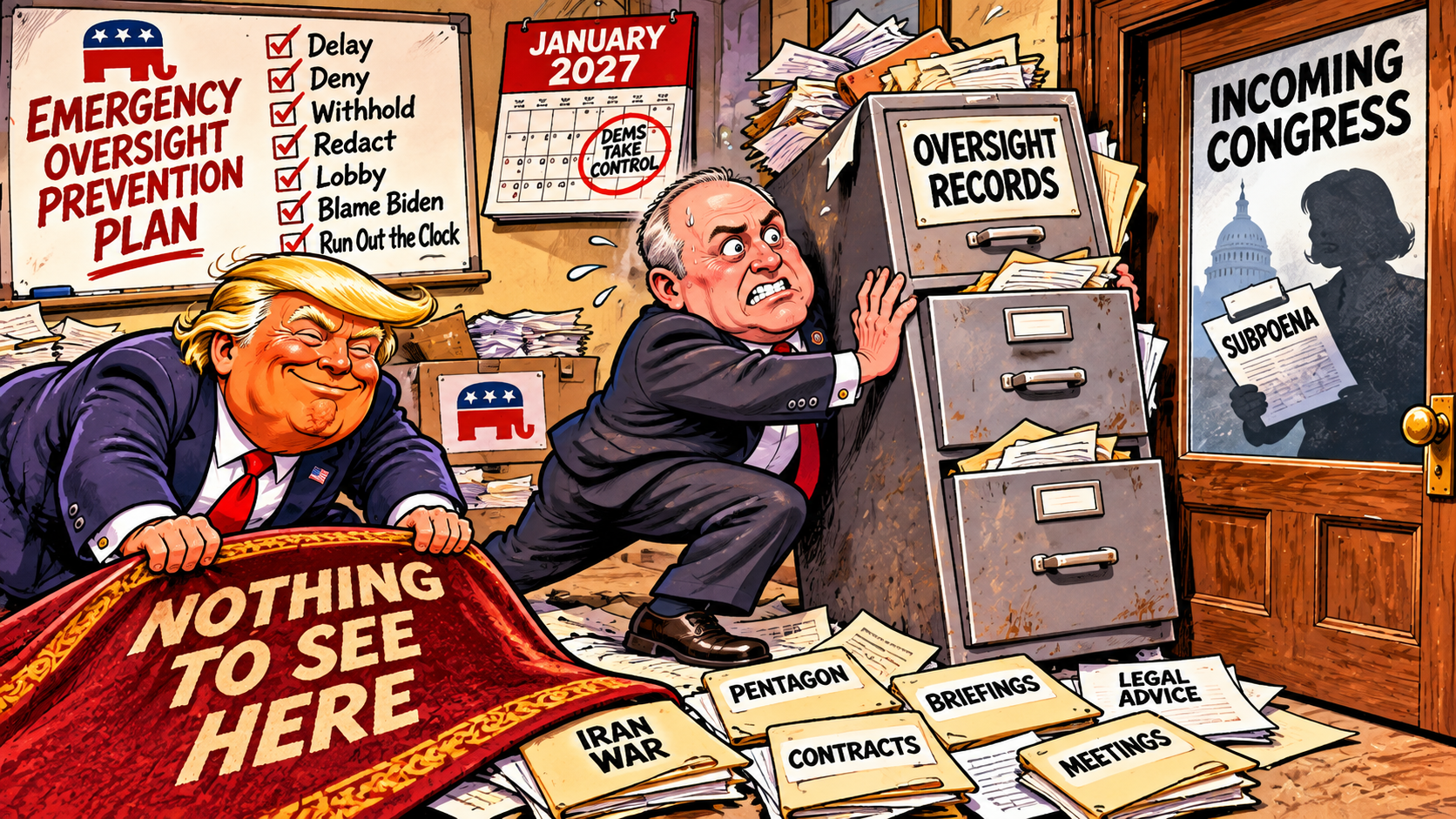
That is a substantial threshold. But the difficulty of obtaining a conviction does not relieve Congress of its responsibility to investigate serious allegations of misconduct. The incoming Democratic majorities will have an opportunity to conduct oversight that the previous Congress often declined to pursue. The Associated Press reports that Democrats are preparing extensive investigations into the Trump administration.
Good.
Those investigations should be serious, organized, and supported by evidence. They should also be prepared to follow that evidence wherever it leads, including into the Oval Office.
If the evidence establishes constitutionally sufficient grounds for impeachment, Congress should act accordingly. There is no constitutional requirement that legislators wait until the next presidential election to address impeachable misconduct.
And the President’s political allies should remember something important: constitutional limitations on executive power are supposed to protect the country regardless of which political party controls the White House.
Republicans may eventually find that principle considerably more appealing now that the electorate shows signs of wanting to move on from this island of misfit toys. Assuming, of course, that anyone in Washington still remembers how the Constitution works when Republicans learn the political winds are shifting and find their integrity for the sake political survival.
Pete Hegseth: It’s a Start
There is a temptation to regard Hegseth’s political predicament as a satisfying conclusion to an otherwise miserable chapter. The Defense Secretary becomes the scapegoat. The President announces a personnel change. Congressional Republicans express renewed confidence in the administration. Everyone promises to learn important lessons.
Perhaps somebody even commissions a report. Washington is exceptionally good at commissioning reports.
But the allegations against Hegseth concern the exercise of enormous governmental power, including decisions involving military force, constitutional authority, and human lives.
Massie’s impeachment effort provides Congress with a concrete opportunity to examine the allegations and decide whether the evidence warrants formal constitutional action. It also provides a useful test of the newly discovered enthusiasm for accountability among politicians who spent the last two years defending the administration.
Will Congress examine the conduct? Will it demand answers? Will it investigate the President’s role? Or will everyone be satisfied once Pete Hegseth has been escorted out of the Pentagon and the White House has found somebody else to explain why the war was such a wonderful idea?
The pessimist would say none of those, but the optimist would say:
Pete Hegseth may be the first official to face the consequences.
It’s more than a start. It’s a charted path toward broader accountability for a nation that has lacked it for over a decade now.
Keep going!
The Removal Advance is an independent political commentary and satire publication. This article expresses the opinion of its Editorial Board. Allegations discussed herein remain subject to investigation and the constitutional processes described above.