The 2026 Midterm Win for Democrats, the Voters Pollsters Keep Missing, and the Beginning of the End of Trump’s Political Dominance
Mississippi.
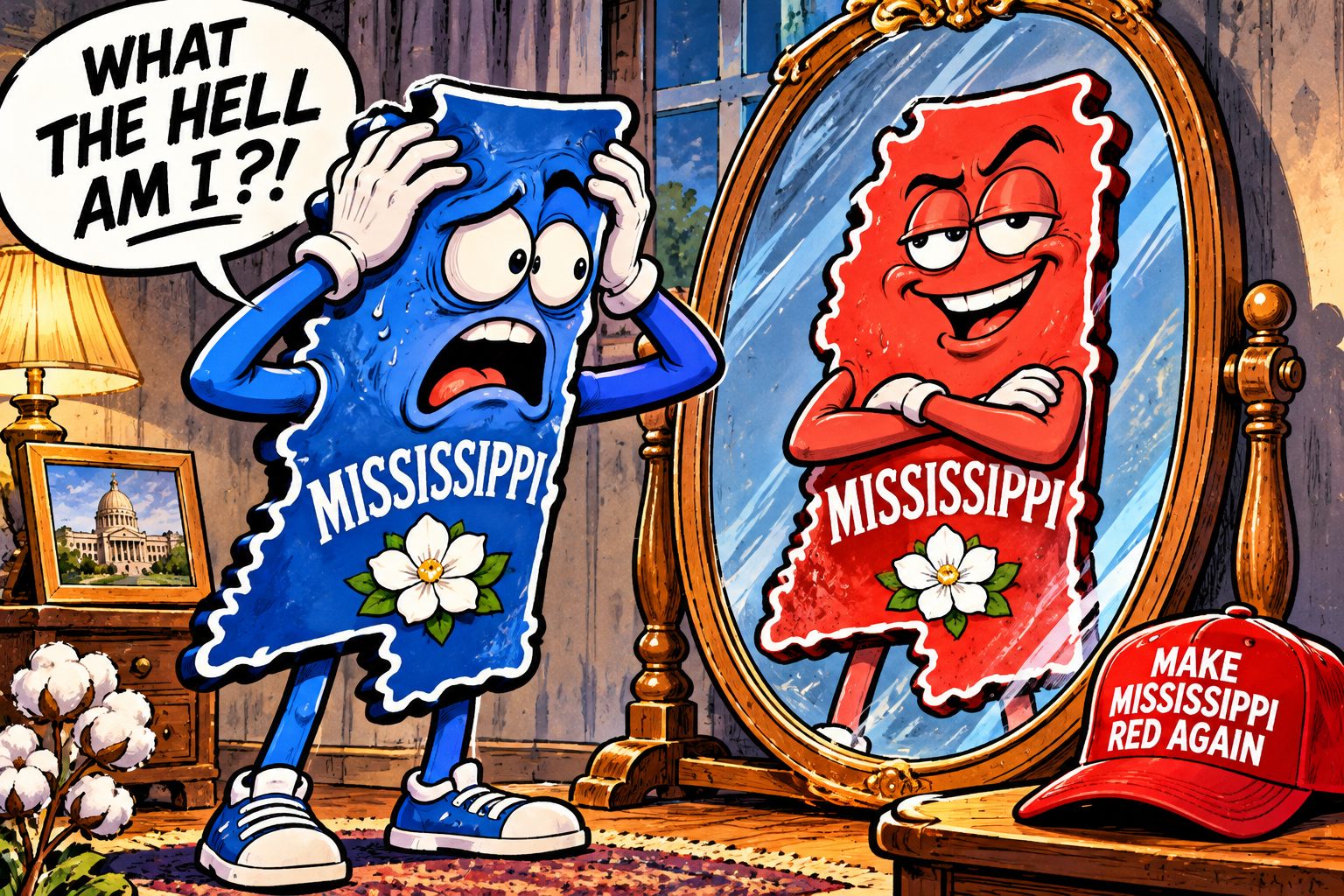
Of all the places in the United States where Donald Trump’s Republican Party might have expected to find refuge from Tuesday night’s electoral trouncing, Mississippi should have been near the top of the list. Mississippi!
The state Donald Trump carried by nearly 23 percentage points in 2024. The state that hasn’t elected a Democrat to the United States Senate since 1982. The state where Republican incumbent Cindy Hyde-Smith entered Election Day as the overwhelming favorite. And yet, as Wednesday morning arrived, Democrat Scott Colom was locked in a virtual tie with Hyde-Smith, with the outcome still unresolved.
A state that voted for Donald Trump by almost 23 points two years ago was suddenly contemplating sending a Democrat to the United States Senate. That is certainly not a routine midterm correction. That is a political shakeup that is unrivaled in the modern era. Mississippi was hardly alone, as the champagne corks began popping almost before the last polls closed. The nationwide victory is certainly cause for celebration, but the takeaway from the message voters sent last night is not an unrestricted endorsement of all of the policy proposals of the Democrats or the DSA; quite the contrary.
Last night was a referendum and rebuke of President Donald Trump, and Democrats would be well-advised to make that referendum their top priority for the benefit of the nation, the Democratic Party, and yes, even the Republican Party.
A Decisive Win With National Implications
Across the country, voters delivered a sweeping rejection of Republican governance.
Democrats captured control of both chambers of Congress, flipping at least seven Republican-held Senate seats and more than two dozen House districts, according to early Associated Press reporting. Republican candidates suffered defeats in territory that had comfortably supported Trump just two years earlier.
The losses extended into governorships and state legislatures, demonstrating that the backlash was neither confined to Washington nor attributable to one particularly unpopular congressional candidate. Republicans had spent enormous sums trying to prevent precisely this outcome. Redistricting, advertising, presidential endorsements, and the familiar appeals to partisan loyalty proved insufficient.
Voters were not buying what they were selling. And the most consequential part of Tuesday’s results may not be the number of seats Democrats won. It may be the number of voters who appear to have concluded that the Republican Party, under Donald Trump, no longer deserves their support.
Mississippi Is the Warning Republicans Cannot Ignore
Consider the arithmetic. Trump carried Mississippi by approximately 22.9 percentage points in 2024. Republican Senator Roger Wicker won reelection that year by an even larger margin.
On Tuesday, Scott Colom brought a Senate contest in that same state to within a fraction of a percentage point. One election does not establish that Mississippi has become a Democratic state. It hasn’t been friendly territory for decades and is not poised to be fertile ground in the elections to come. A close race does not necessarily mean that every voter who abandoned a Republican candidate has permanently abandoned the Republican Party.
But something changed. That change may finally reflect dissatisfaction with Trump, candidate-specific considerations, an unusual turnout coalition, or some combination of those forces. Republicans cannot reasonably dismiss the magnitude of the movement.
One thing is unequivocally true. Mississippi was supposed to be safe. Instead, it became one of the most remarkable Senate contests in the country. When Mississippi becomes competitive, the problem is no longer confined to the battleground state and the message should be taken on a much larger scale.
The Pollsters May Have Been Missing the Wrong Voters
For years, American political polling has been haunted by a familiar question: Are pollsters systematically underestimating Donald Trump’s support? There is certainly enough data out there to suggest they had. The 2016 and 2020 presidential elections exposed significant polling errors, particularly in states where Trump performed better than many surveys anticipated.
The conventional explanation involved voters who were difficult to reach, reluctant to participate, distrustful of institutions, or inadequately represented in polling samples. But Tuesday’s results raise a different possibility. What if the voters escaping the pollsters’ attention are not disproportionately Trump’s voters (or at the very least are no longer Trump’s voters)?
Consider Mississippi. The final forecast published by 99chambers projected a Republican victory by approximately 7.3 points and assigned Hyde-Smith an 86% chance of winning. Decision Desk HQ gave her a 91% probability of victory. Other models were even more confident.
Yet the actual race became a statistical dead heat. We should be precise about what that establishes. Forecasting models are not identical to opinion polls. They incorporate polling, historical voting patterns, incumbency, turnout assumptions, and other information. Their errors cannot automatically be attributed to polling nonresponse.
Nevertheless, the discrepancy is real, measurable, and politically significant. And it raises a hypothesis worth investigating.
The Anti-Establishment Voter Nobody Can Quite Find
There may be an increasingly consequential constituency in American politics that does not identify strongly with either major political party, distrusts established institutions, and has little interest in answering questions from strangers conducting political surveys. These voters may not consider themselves Democrats. They may not even particularly like Democrats.
They may simply be exhausted by a political system that repeatedly promises change and delivers more of the same. In 2016 and 2020, distrust of political institutions was an important feature of Trump’s appeal. His supporters often regarded him as an outsider confronting an entrenched political establishment. But Donald Trump is no longer an outsider.
He has occupied the presidency twice. His political movement dominates the Republican Party. His endorsements shape its nominations. His personal controversies consume extraordinary amounts of congressional attention.
He is, in practically every meaningful political sense, part of the establishment. And voters who once supported him because they wanted to disrupt that establishment may now regard him as one of its most conspicuous representatives. The hypothesis is straightforward: an electorate motivated by anti-establishment frustration may be shifting against Trump faster than conventional polling models can detect.
That proposition is not yet proven. It is also not inherently untestable. Researchers could examine changes in survey response rates, party identification, voter-file turnout histories, and precinct-level shifts, particularly among irregular voters and independents. Recontact studies comparing pre-election responses with validated turnout records could help distinguish persuasion from differential participation.
What we cannot do is identify nonrespondents’ motivations simply by observing an unexpected election result. But the question deserves serious investigation. The electorate that surprised the country by elevating Trump may now be capable of surprising it again by rejecting him entirely.
And if that is happening, Tuesday’s results may be the beginning of a larger political realignment.
The Exit Polls Reveal Something More Important Than Party Loyalty
The available voter surveys lend substantial support to the broader argument that Americans are frustrated with the political system. According to the Associated Press Voter Poll, approximately three-quarters of voters expressed dissatisfaction or anger with the direction of the country.
About eight in ten reported that inflation had imposed at least moderate financial hardship on their households. Roughly seven in ten believed Congress was doing too little to restrain presidential power. That bears repeating: 70% of people believe Congress was not doing enough to check Donald Trump. And approximately four in ten voters said their congressional vote was intended to oppose Donald Trump, compared with fewer than two in ten who said they were voting to support him. This means, contrary to Donald Trump’s rationalizations that “[he] was not on the ballot,” 40% of the people who cast their vote this cycle thought otherwise.
Those figures are devastating for a president who repeatedly insisted that his political popularity could overcome virtually any obstacle. But there is another finding that deserves equal attention.
The Democratic Party is not particularly popular either.
CBS News reported that neither major political party enjoyed majority favorability. Approximately one in five Democratic House voters held an unfavorable opinion of the Democratic Party itself.
Think about that. It’s like walking out of the bar following a long night of drinking with your two friends: Larry and Daryl. You really do not want either of them driving, but after Daryl insists, you get in the car. Daryl proceeds to smash both sides of the vehicle and there is widespread consensus that Daryl does not belong driving. That is not an endorsement of Larry’s driving abilities while under the influence, but rather an indictment that Daryl needs to be removed from the driver’s seat. (Here is the obligatory accompaniment of a disclaimer: DON’T DRINK AND DRIVE!)
Last night, many Americans voted for Democratic candidates despite disliking the Democratic Party. That is not a mandate. The distinction is rather significant. Democrats would be making a serious blunder if they interpreted every Republican defeat as an unconditional endorsement of their own policies, leadership, and priorities. Tuesday’s results offer a much more defensible conclusion: Voters want something to change. And they believe Daryl should no longer have unfettered control of the car.
The Constitutional Answer to a Political Problem
There is a temptation, after an election like this, to treat the results as the end of the story. Democrats have won Congress. Republicans have suffered extraordinary losses. The president has received a political rebuke.
Now, conventional wisdom suggests, everyone should prepare for the next election. But the Constitution does not require Congress to wait until the next presidential election to address presidential misconduct. 7 in 10 voters voted to limit Donald Trump. And the takeaway should not be to play politics for the next two years to remove him from the driver’s seat. The Constitution provides an impeachment process.
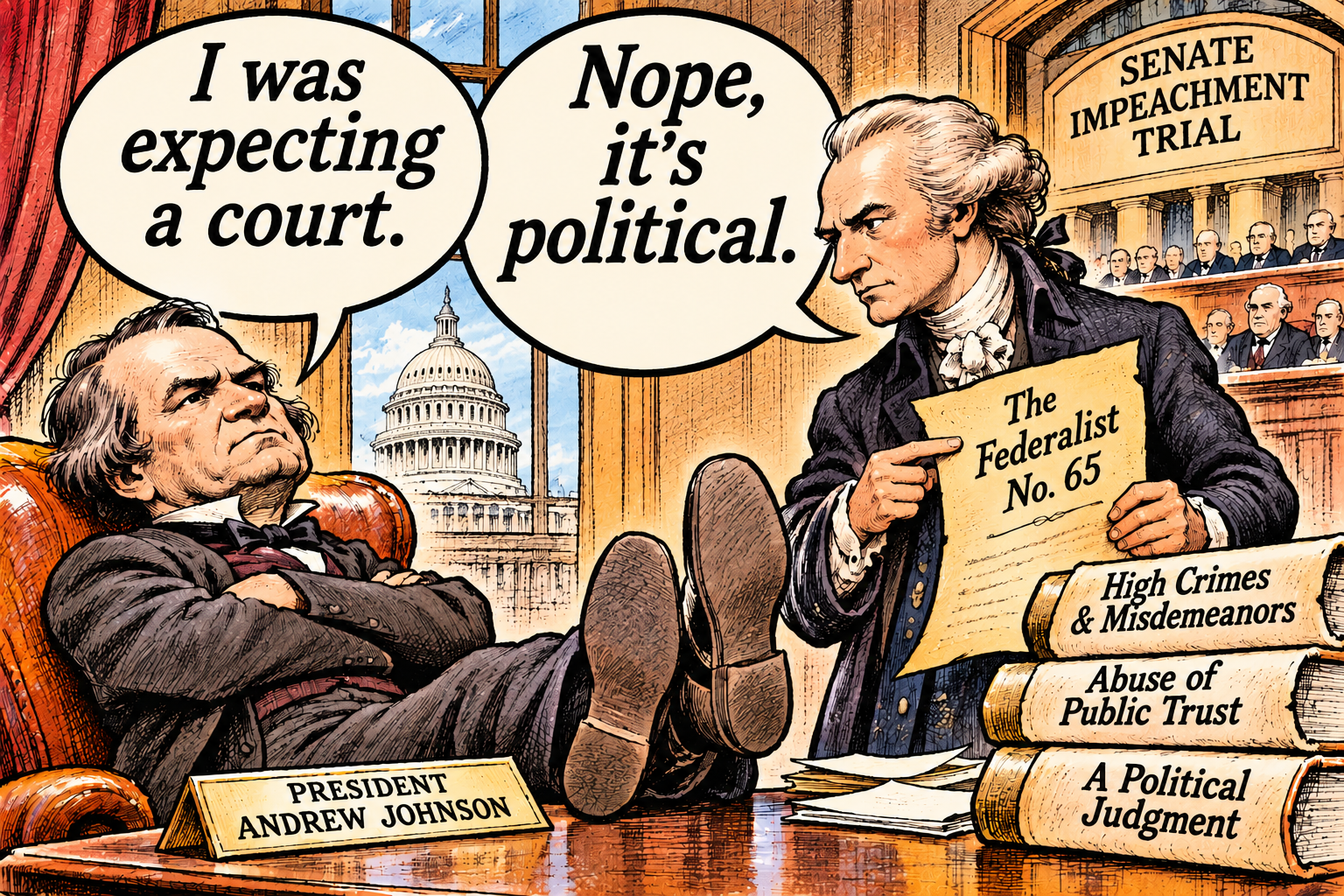
The House of Representatives possesses the sole power of impeachment. The Senate possesses the sole power to try impeachments. Conviction and removal require the constitutionally prescribed two-thirds vote of senators present. Those powers exist independently of the electoral calendar.
They are not rendered unavailable merely because a president is serving his second term, or because removing him would create political controversy. Nor does an unfavorable election result, standing alone, constitute an impeachable offense.
That distinction is essential. Impeachment must rest upon constitutionally sufficient grounds supported by evidence, not simply public dissatisfaction or partisan disagreement. But when such grounds exist, Congress has a constitutional mechanism for addressing them. Spoiler alert: They have not only existed, but have been growing almost weekly since he rode the escalator down on June 16, 2015. And a Congress elected amid widespread dissatisfaction with presidential conduct should not pretend that the mechanism is unavailable.
The question is not whether Donald Trump should be deprived of his constitutional rights. He should not. The question is whether the American people should continue to be subjected to an administration’s conduct without Congress fully exercising the constitutional powers entrusted to it. In sum, the American people sent a message for you to do your job, now do it.
Let the Country Move Forward
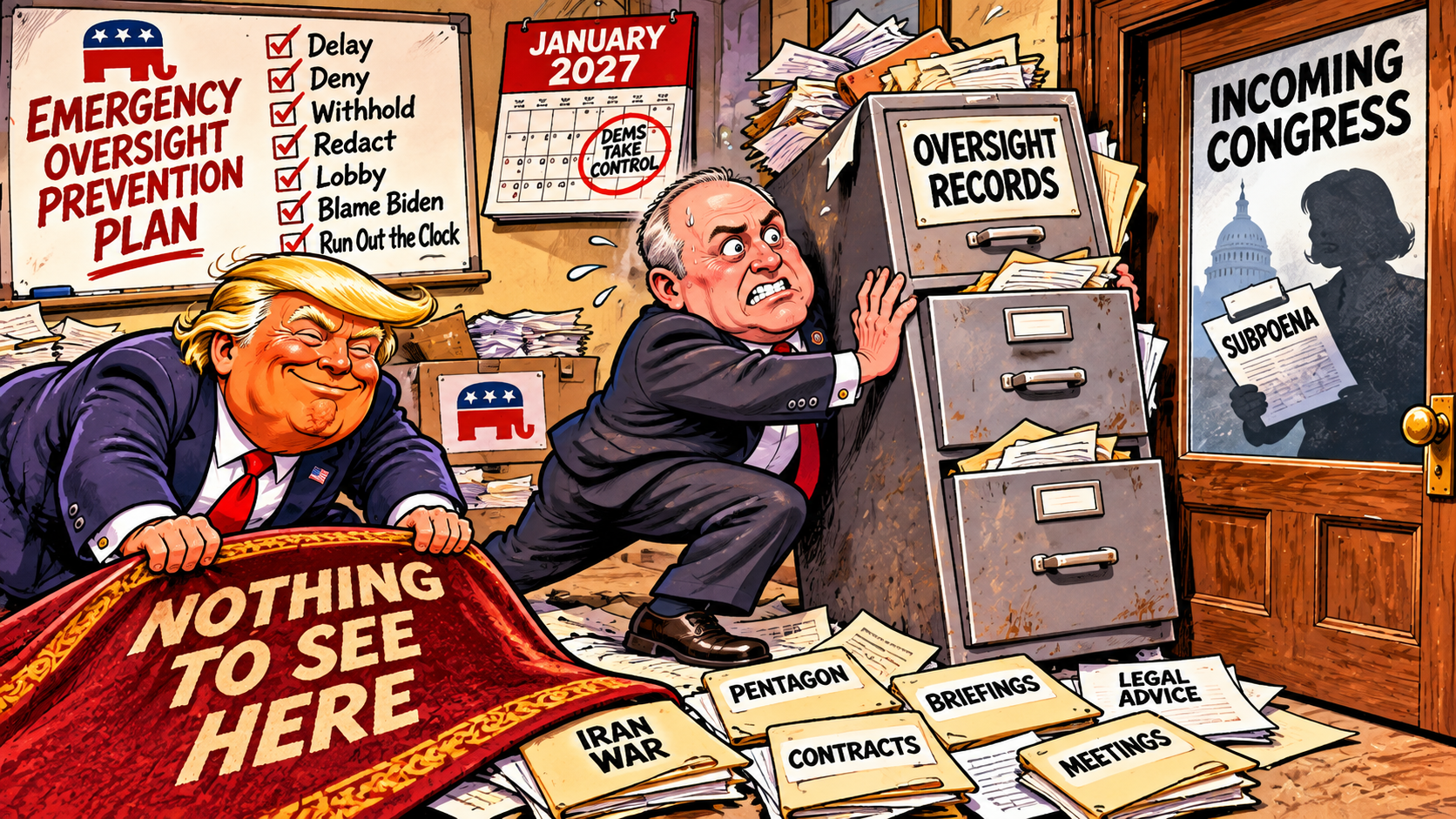
The most revealing feature of Tuesday’s election may ultimately be that Americans are tired of organizing their entire political existence around Donald Trump. For more than a decade, he has dominated political discourse, consumed institutional attention, and transformed ordinary disagreements into seemingly permanent national emergencies.
His supporters have been told that he alone can repair the country. His opponents have been told that defeating him is the prerequisite to repairing anything. Meanwhile, millions of Americans are trying to pay their mortgages, buy groceries, raise their children, and get through the week. They deserve a government capable of functioning without every national conversation becoming another referendum on one man, and for the last decade, he has not allowed any alternative.
That is why Mississippi matters. Not because Mississippi has suddenly become a liberal stronghold. Not because one election proves the permanent collapse of the Republican Party. But because even in places where Trump’s political coalition once appeared virtually impregnable, the electorate is showing signs of profound dissatisfaction. And that dissatisfaction is no longer confined to Democrats. It may be coming from the very voters who once made Trump politically formidable.
The constitutional system provides a means of responding to presidential misconduct. Congress should investigate where warranted, exercise meaningful oversight, and, where the evidence establishes constitutionally sufficient grounds, pursue impeachment and removal through the procedures prescribed by the Constitution.
The objective should not be vengeance. Rather, Trump established his lawlessness years ago and has an almost endless assortment of “high crimes and misdemeanors” from which to choose. The solution lies in Congress exercising its powers under the Constitution. Impeachment is in the interest of restoring the capacity of the American political system to function without Donald Trump occupying the center of every decision, every controversy, and every election. It is axiomatic that this would benefit not only the country, but the long-term sustainability of the Republican Party as well.
Tuesday night, voters made one thing unmistakably clear.
They want change. Mississippi. Yes, even Mississippi. To those newly elected to Washington, the ball is in your court.
The Removal Advance is an independent political commentary and satire publication. This article expresses the opinion of its Editorial Board. Election results discussed herein are preliminary as of the morning of November 4, 2026.